
Knock Knees Treatment in Austral, NSW
Knock Knees Treatment Near You
Knock knees, known clinically as genu valgum, is a condition where the knees angle inward when a child stands with their feet apart. It is a common part of lower limb development in young children and often resolves without intervention. When it persists beyond the expected age, causes pain, or affects how a child walks, an assessment can help clarify whether treatment is appropriate. At Austral Podiatry, we provide knock knees treatment in Austral, NSW, to evaluate your child’s lower limb alignment and support healthier movement as they grow.
If you are looking for knock knees treatment near you, we offer individualised assessment and management for children with lower limb alignment concerns. We assess your child’s foot posture, leg alignment, and movement patterns to determine whether treatment may be appropriate.
Understanding Knock Knees in Children
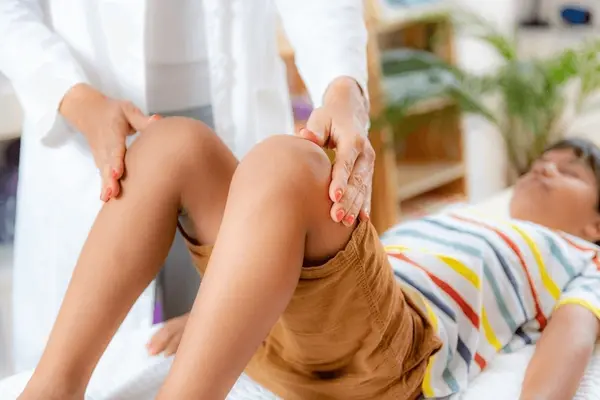
Knock knees, also known as genu valgum, occur when the knees angle inward toward each other while a child is standing or walking. This is a common part of normal lower limb development, particularly in younger children.
Our podiatrist in Austral, NSW, assesses your child’s lower limb alignment, foot posture, and movement patterns before recommending treatment. Not every child with knock knees requires intervention. If the alignment is appropriate for your child’s age and development, we can explain what is considered normal and advise you on what to monitor as they grow.
A small degree of inward angulation is generally expected between the ages of three and five and typically improves as the child grows, often correcting by around seven or eight. However, persistent, pronounced, or uneven alignment may require closer assessment, particularly if your child experiences pain, fatigue, frequent tripping, or difficulty with physical activities.
When Might Your Child Need Knock Knees Treatment?
An assessment may be helpful if your child experiences any of the following symptoms or changes in their lower limb alignment:
Persistent Knock Knees
Inward knee angulation that continues beyond the expected age of natural correction.
Knee or Leg Pain
Discomfort during or after walking, running, or physical activity.
Flat Feet with Knock Knees
A combination of flat feet and inward knee alignment causing discomfort or fatigue.
Frequent Tripping
Stumbling that may be linked to your child’s lower limb alignment during movement.
Asymmetrical Alignment
One knee angles inward noticeably more than the other.
What Are the Benefits of Knock Knees Treatment?
When knock knees are causing discomfort or affecting how your child moves, appropriate treatment can provide meaningful support.
Benefits may include:
Clarity for Parents
We can confirm whether your child’s alignment warrants intervention or monitoring.
Reduced Discomfort
Targeted treatment can help reduce knee and leg pain during everyday activity.
Improved Movement
Addressing contributing factors such as flat feet or muscle weakness can support healthier movement patterns.
Injury Prevention
Identifying alignment concerns early can help reduce the risk of activity-related injuries.
We provide knock knees treatment in Austral, NSW, with recommendations tailored to your child’s age, degree of angulation, symptoms, and individual needs.
What Happens During and After Your Child's Appointment?
At our podiatry clinic in Austral, NSW, appointments are calm and child-friendly. We explain each step before we begin. The appointment may include:
Health and Development History
We ask about your child’s development, activity level, any pain, and what you have noticed at home.
Lower Limb Alignment Assessment
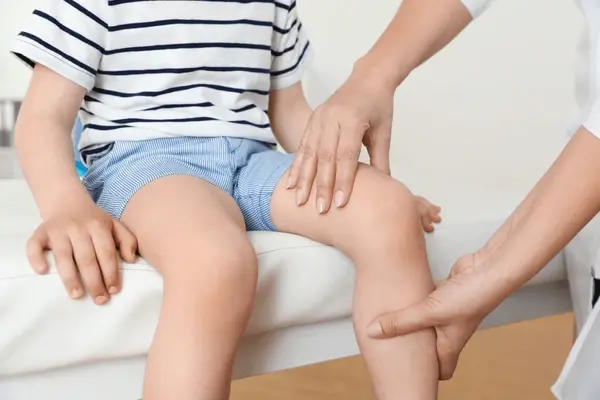
We evaluate knee alignment, foot posture, and overall lower limb structure.
Visual Gait Analysis
We observe how your child walks and runs to assess how their alignment affects movement.
Muscle and Joint Testing
We assess flexibility and strength in the lower limbs to identify contributing factors.
Findings and Recommendations
We explain what was observed and outline appropriate next steps.
Once the assessment is complete, we will recommend the most suitable course of action. This may include a stretching and strengthening program, orthotics, footwear advice, or scheduled monitoring.
Why Choose Austral Podiatry for Knock Knees Treatment?
At Austral Podiatry, every child is assessed as an individual. Sabrina Hatem, Bachelor of Podiatric Medicine and member of the Australian Podiatry Association, leads an owner-operated practice where every assessment is conducted personally and every recommendation follows from clinical findings.
Our approach includes:
Individualised Treatment
Recommendations are tailored to your child’s alignment, movement patterns, symptoms, and developmental stage.
Movement and Alignment Assessment
We assess foot posture, leg alignment, muscle function, and walking patterns to guide treatment.
Orthotic Support
Where appropriate, orthotics may be recommended to support foot function and lower limb mechanics.
Exercise and Strengthening
Targeted exercises may help improve strength, flexibility, and movement control.
Ongoing Monitoring
Follow-up appointments allow us to monitor changes and adjust treatment as your child grows.
Consistent Care
As an owner-operated practice, Sabrina Hatem provides continuity of care throughout your child’s treatment.
Help Your Child Stand Tall and Move Freely
Knock knees are common in young children, but when the alignment persists, causes discomfort, or affects everyday movement, an assessment can help determine whether further support is needed.
If you are looking for knock knees treatment near you, our team can help you understand your child’s alignment and discuss appropriate next steps. Call (02) 8104 1242 to book an appointment at Austral Podiatry.
FAQs
At what age should knock knees resolve?
A mild degree of knock knees is normal between the ages of three and five and typically resolves by around seven or eight. If the alignment persists or causes discomfort, a clinical assessment can help determine whether support is appropriate.
Does knock knees always require treatment?
No. Where the alignment is within the expected range for your child’s age and is not causing any functional concern, we will advise on what to monitor. Treatment is only recommended when the condition is persisting or affecting how your child moves.
What treatments are available for knock knees?
Treatment depends on your child’s age, alignment, symptoms, and movement patterns. Where appropriate, management may include targeted stretching and strengthening exercises, orthotic support, footwear advice, or regular monitoring as your child grows.
How much does knock knees treatment cost?
The cost will depend on the type and number of appointments and any additional treatment recommended. We will explain the recommended treatment and associated fees before proceeding. Private health insurance, Medicare, DVA, and WorkCover rebates may be available depending on your eligibility and circumstances.